Overview
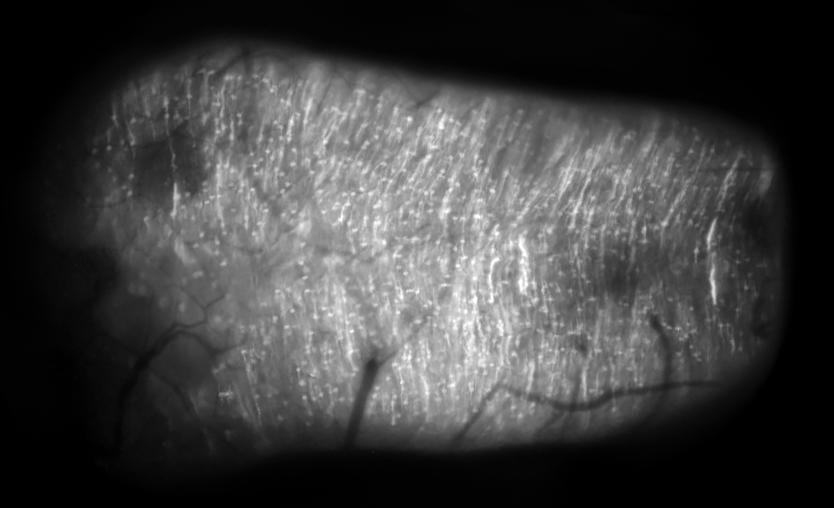
In the Brown Lab, we study the cerebellum, a brain region that contains some of the fastest firing neurons in the nervous system and whose output guides the execution of movement. The wiring diagram of the cerebellum is exquisite – its neurons, the synaptic connections between them, and their sensorimotor inputs are all layered into a near-crystalline circuit. We take advantage of this stereotyped organization and genetic access to specific cell types to investigate how its circuits influence sensorimotor behaviors in mice. To capture fast firing dynamics, we develop high-speed voltage imaging approaches to optically record action potentials from hundreds of cerebellar neurons in vivo, enabling direct tests of how they transform sensorimotor inputs, contribute to local circuit operations, and give rise to emergent population codes. To causally interrogate how specific cell types contribute to computation and behavior, we use holographic optogenetic strategies to selectively activate or silence subsets of neurons. We aim to gain a mechanistic understanding of the millisecond timescale operations carried out by cerebellar circuits, and more broadly, to lay the foundation for studies of how cerebellar deficits contribute to ataxia, Fragile X syndrome, and autism.